
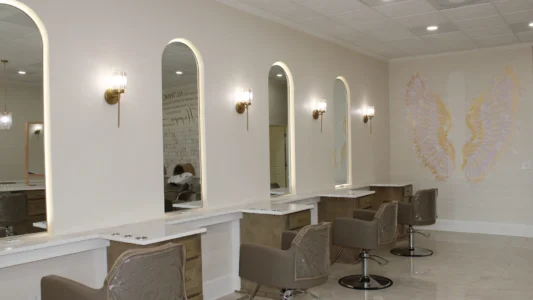
A Hair Color Appointment is easier to plan when you can explain your starting point, the change you want, and the maintenance you are comfortable continuing. The service name is only one part of that conversation. Previous color, everyday styling, the condition of your lengths, and the appointment scope all deserve attention before work begins.
If you are exploring a color change in Columbus, Georgia, this guide gives you nine practical preparation steps. You will also find a simple history worksheet, questions about timing and budget, and a way to compare your inspiration photographs without treating them as a guaranteed outcome.
Use the guide to prepare for a discussion with Halo Salon + Blowout Bar Columbus. Specific color services, product systems, testing instructions, prices, and appointment availability must be confirmed directly with the salon. The aim is to help you ask clearer questions and understand the plan you are considering.
Give your Hair Color Appointment a clear purpose
Start by describing what you notice in your current color. Perhaps the overall impression feels darker than you prefer, the front does not appear bright enough, or the contrast at your part no longer suits you. Describe what you see before choosing a technique.
Then identify what you want to keep. You may like your natural depth, need a routine that allows flexibility between visits, or want to preserve the appearance of your ends. These preferences are as useful as the change you are requesting.
A clear brief might be: “I want a brighter impression around my face, while keeping depth elsewhere and a manageable maintenance routine.” That leaves room for an informed recommendation. It is more precise than choosing several appointment labels and hoping they describe the same result.
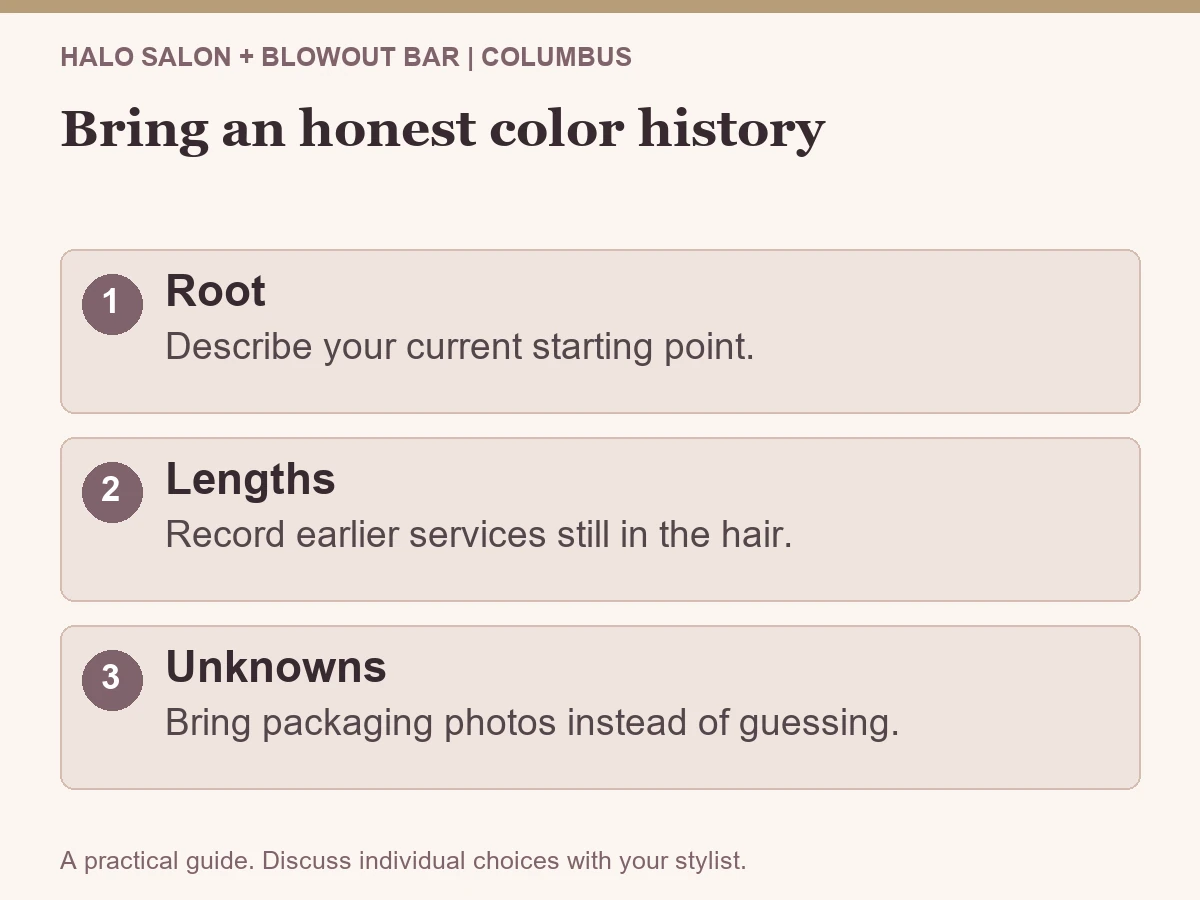
1. Write down the history still present in your hair
Prepare a timeline of previous permanent color, lightening, color removers, direct dyes, smoothing, relaxing, perming, and other relevant chemical services. Include home products and anything whose ingredients or purpose you cannot identify.
Think about the current lengths rather than only the last few months. Older ends may have experienced services that new growth has not. If you are unsure whether a product is relevant, mention it and let the professional ask follow-up questions.
Photographs of packaging, previous salon notes, and earlier pictures can be useful. Avoid guessing a formula because the name sounds familiar. “I used a dark home color, but I do not know which type” is more reliable than an invented technical answer.
This information does not mean you must diagnose your own hair. It gives the stylist context for assessment and helps explain why a Hair Color Appointment may need a different scope from the one you first imagined.
2. Bring a small, annotated inspiration folder
Choose a few photographs and write one sentence about each. Identify the tone, brightness, placement, or contrast you like. A picture can contain several features, and the one you notice may not be the one a stylist would assume you mean.
Compare the reference with your starting length and visible density. Also notice whether the hair is straight, waved, or photographed under strong lighting. Those factors can change how a color pattern appears.
Include a current photograph of your own hair in ordinary light. Do not apply a filter that changes the shade or smooths away differences through the lengths. The purpose is to communicate useful information, not to create a polished portrait.
Add one example showing a feature you would prefer to avoid, such as a very strong face frame or a particular contrast. Explain the specific detail rather than saying that an entire style is wrong.
3. Separate brightness, tone, and placement
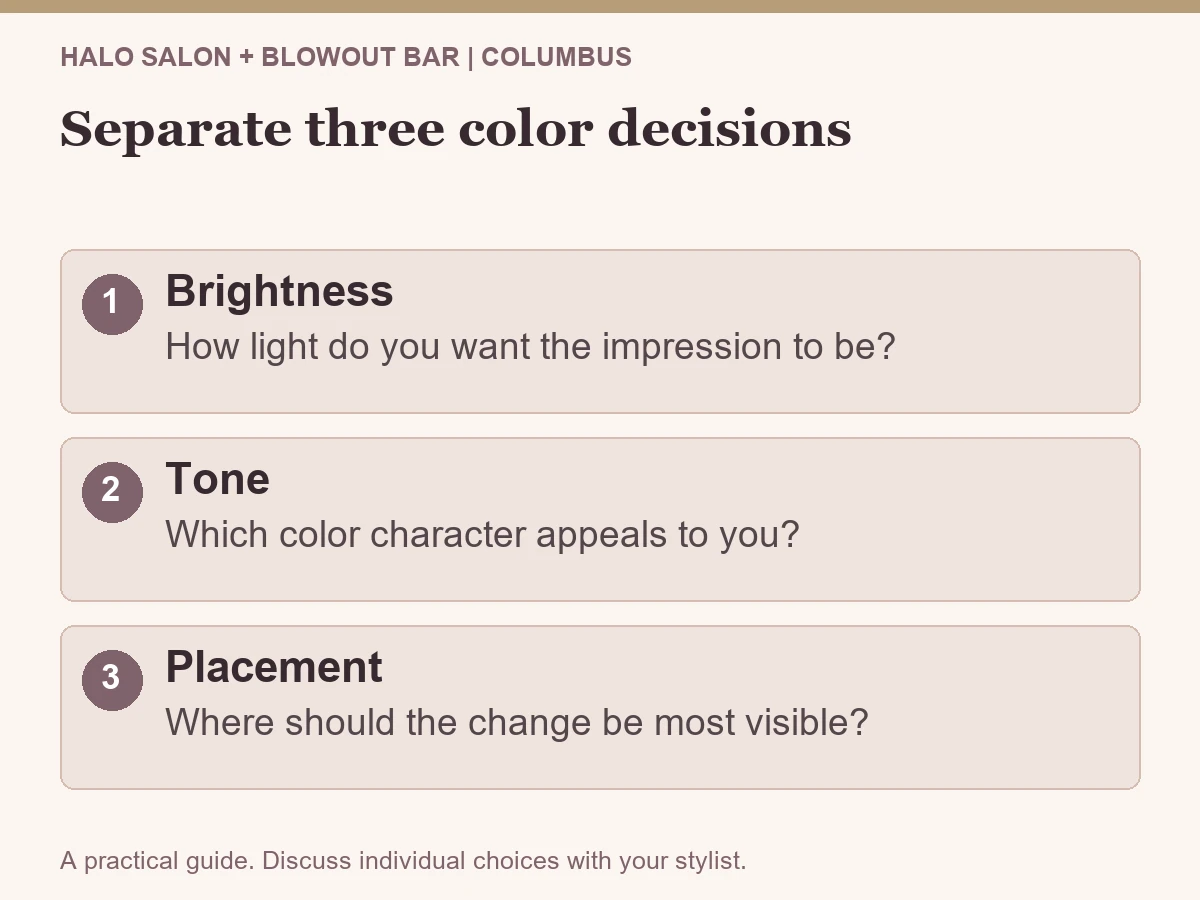
These are different decisions. Brightness concerns how light the overall effect appears. Tone describes the color character you notice, while placement concerns where the lighter or deeper areas sit. You may want to change one without changing all three.
Ask your colorist to help translate the photograph into those components. For example, an image may appeal because of the soft root area even though the ends are much lighter than you want. Without explaining that distinction, you could end up discussing a larger change than intended.
Professional technique guides can help with vocabulary. Hair.com’s comparison of balayage and highlights explains common placement terms. Use it to prepare questions rather than to prescribe a formula or a guaranteed service sequence.
At your Hair Color Appointment, summarize the agreed direction in your own words. If the proposed plan sounds different from your goal, ask for clarification before work starts.
4. Discuss product history and testing instructions
Tell the salon about previous reactions, irritation, or discomfort associated with hair-color products. Do not assume an old experience is irrelevant because the product had a different brand name. Describe what happened without trying to identify the cause yourself.
Ask whether the proposed service requires advance testing or other preparation. The FDA’s hair-dye guidance discusses following directions, warnings, and patch-testing instructions. Follow the requirements for the actual products being considered.
A strand assessment and a skin-related test address different questions. Ask the professional to explain what is being assessed and what a result can and cannot tell you. Do not treat one test as a substitute for another.
If a previous reaction or a current scalp concern needs medical assessment, address that with an appropriate clinician before proceeding. An appointment should not depend on concealing relevant information to keep a desired date.
5. Confirm what the appointment includes
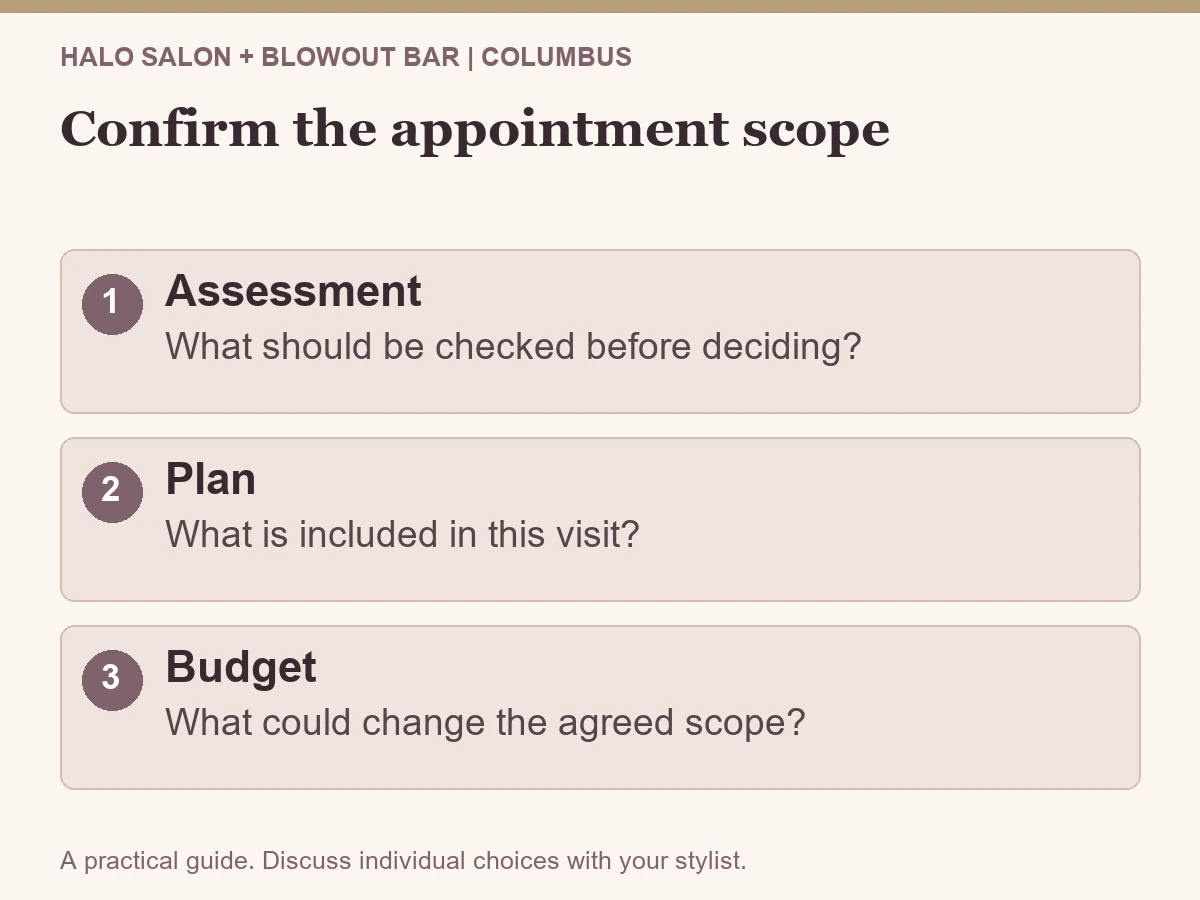
Ask which steps are included in the proposed booking and what each is intended to achieve. A service might involve lightening, tonal refinement, root work, or finishing, but the actual scope belongs to the salon’s confirmed plan.
Do not assume that a photograph can be reproduced through a single service with a familiar name. Some goals may require an assessment, a different starting approach, or more than one visit. Ask how the professional reached that recommendation.
Clarify what happens if assessment changes the plan. You should know when the scope and price would be discussed again, rather than discovering an additional step after agreeing to something else.
For a Hair Color Appointment, a useful question is: “What are we aiming to achieve in this visit, and what are we deliberately leaving for later?” That separates the immediate decision from a longer-term possibility.
6. Plan a budget that includes maintenance
Tell the salon what you are comfortable spending and ask for current pricing for the proposed work. Clarify what is included, which additions are optional, and what could affect the final amount. A reference image is not a price estimate.
Discuss the follow-up routine as well. Future color visits, tonal refreshes, home-care products, and the styling effort you prefer can all influence whether a plan feels sustainable. Ask which parts are essential and which are a matter of preference.
There is no need to choose the largest possible change immediately. A more focused adjustment may fit your priorities better. The important point is understanding the tradeoff, not assuming that every lower-maintenance option produces the same look.
Write down the agreed appointment scope and any later recommendations separately. A recommendation is not the same as a confirmed booking or a fixed future price.
7. Be realistic about time and event dates
Tell the salon if you are planning around photographs, a celebration, travel, or another date that matters. Give that context when arranging the visit, rather than treating it as a detail to mention after the service begins.
Ask how long the actual appointment is expected to take and whether your goal calls for more than one visit. Avoid using a social-media transformation clip as a guide to timing. A short video can leave out preparation, assessment, processing, finishing, and earlier appointments.
If you have a hard departure time, discuss it in advance. You may need a different date or a more limited objective. Creating pressure midway through a service does not improve the plan.
Do not schedule a major change solely because a particular day is convenient. A Hair Color Appointment should fit both your calendar and the professional assessment of what is appropriate.
8. Arrive according to your salon’s instructions
Ask how the salon wants you to prepare your hair for the booked service. Advice such as “always arrive freshly washed” or “always arrive with several days of buildup” is too broad to replace appointment-specific instructions.
Tell the team about products that may be present, including temporary color, heavy styling products, or anything unusual used recently. If you cannot follow an instruction, ask what to do instead of quietly improvising.
Wear comfortable clothing and keep your notes easy to access. Bring the references you selected, not a last-minute collection of conflicting ideas. A focused conversation is easier when the key information is already together.
For Halo Columbus, check the contact page and your appointment confirmation. The salon is at 6501 Whitesville Rd, Suite 100, Columbus, GA 31904. Confirm current hours and any preparation details directly.
9. Agree on aftercare before you leave
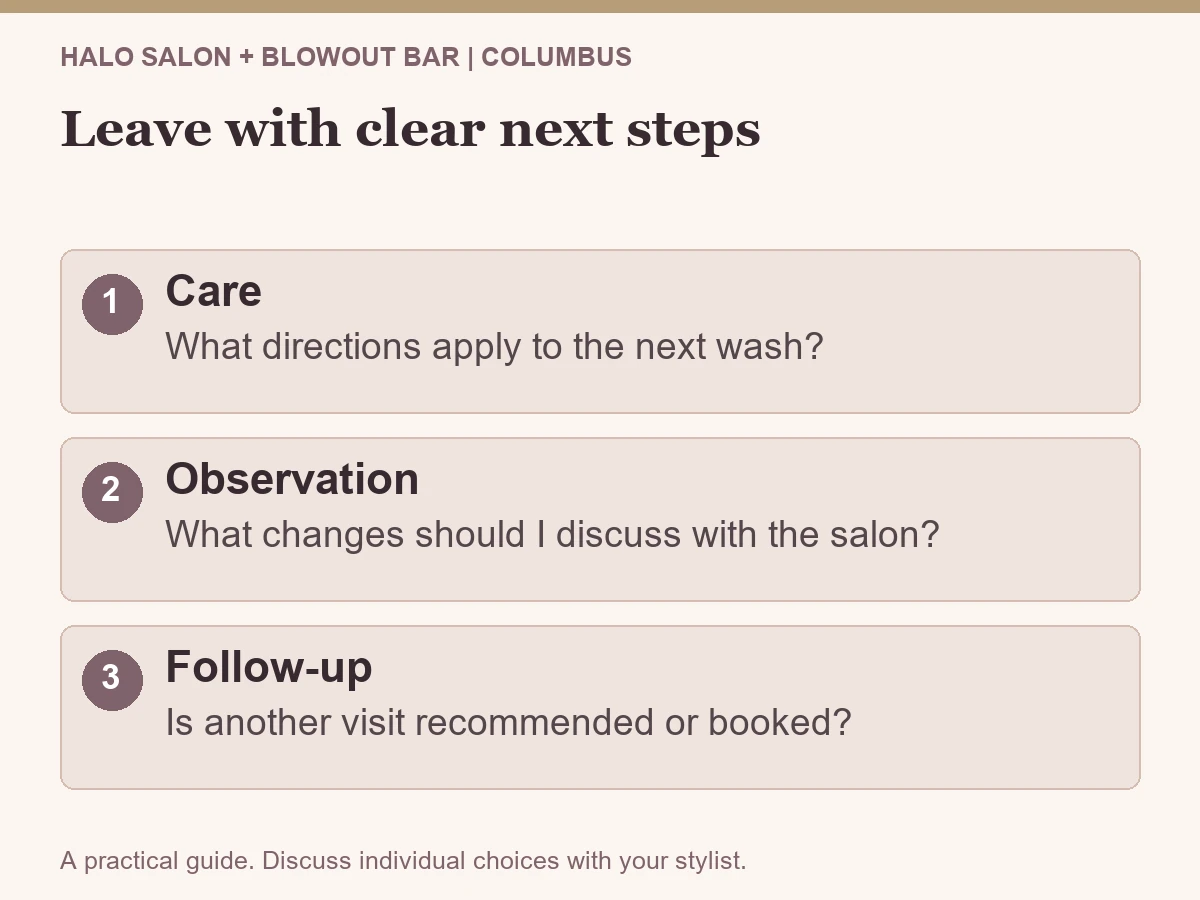
Ask what to do at your next wash, which product directions matter, and how your usual styling routine fits the new plan. Write down the steps in order rather than remembering a collection of names without knowing their purpose.
Ask what changes you might notice as the weeks pass and which of those would be a reason to contact the salon. This helps you distinguish a preference question from a recommendation for another appointment.
Keep a photograph in ordinary light if you want a reference for later conversations. Avoid changing several products at once without understanding the directions, because that can make it harder to explain what works for your hair.
Before ending your Hair Color Appointment, repeat the next step back to the stylist. Make sure you understand whether you have a suggested maintenance plan, a confirmed follow-up, or a question that still needs answering.
Your one-page color-history worksheet
A short worksheet can make the consultation more efficient without turning it into an exam. Record information you know, mark uncertain items clearly, and update the document when something changes.
| Prompt | What to record |
|---|---|
| Current starting point | What you see at the root, middle, and ends in ordinary light. |
| Previous products | Known service or product names, approximate dates, and packaging photographs. |
| Important experiences | Previous reactions, unexpected results, or parts of a routine you could not maintain. |
| Desired change | Brightness, tone, placement, and your most important preference. |
| Practical limits | Budget, available time, tie-back needs, and maintenance preferences. |
For an illustrative example, imagine someone who likes the lighter pieces in a reference but does not want the same overall brightness. Her worksheet can state that she wants a focused change around the face while preserving depth through the rest. That is a clearer brief than asking for “the same blonde” and hoping the stylist interprets the image in the same way.
Another guest may be unsure which home product was used on the ends. Bringing a packaging photograph and acknowledging the uncertainty gives the professional more useful information than guessing a color formula. These examples explain the planning process; they do not represent Halo client cases.
A final decision check before color work begins
Pause long enough to confirm four things: the intended result for this visit, the main steps, the scope and price discussion, and the next part of the maintenance plan. If one of those is unclear, ask another question.
It is reasonable to take time to consider an alternative or a staged approach. A good consultation gives you information you can use, including when your original goal needs to be adjusted. Agreement should mean more than recognizing a familiar appointment name.
You can read about Halo Columbus before visiting, then bring your own priorities to the conversation. Your history, references, and routine make the plan personal.
Create a color brief that fits on one screen
A concise brief can make a Hair Color Appointment easier to discuss. Use five lines: my starting point, my preferred change, what I want to keep, what I can maintain, and what I still need explained. Each line should contain information you know rather than a technical guess.
For the starting point, describe what you see at the root, middle, and ends. For the preferred change, identify brightness, tone, or placement. For the boundary, name the feature you would be disappointed to lose, such as depth, a particular amount of length, or flexibility between visits.
The maintenance line should reflect your real routine. If you are unlikely to follow a detailed product sequence or attend a frequently repeated appointment, make that clear. The final line is a place for questions, including anything you do not understand about the proposed scope.
Use a priority order when two goals compete
Imagine a hypothetical guest who wants a very light reference color but also wants the smallest possible change to her existing routine. Those preferences may require a discussion about compromise. Putting them in priority order helps the colorist explain what a realistic proposal could emphasize.
Another guest may be comfortable with more maintenance but wants to protect the current haircut length. Her boundary is different. The same inspiration photograph can lead to different questions because the practical priorities are different.
Neither example establishes what service should be performed. They show why a good brief is about the person, not only the picture. An assessment is still needed to connect the desired appearance with the hair’s starting point.
Keep the immediate appointment separate from future ideas
During the conversation, you may discuss several possibilities. Ask which one is the actual plan for the booked visit. Write future options separately so they do not become assumptions about what is included now.
This is particularly useful when a larger change is being considered in stages. You should know the objective for the current decision, what will be reviewed afterward, and which later choices remain open. A possible future direction is not a guaranteed outcome or a confirmed booking.
Before agreeing, read the summary back in plain language. If you understand the goal, the scope, and the next step, you are better prepared to decide whether the proposal fits you.
Afterward, keep the brief with any routine instructions. At a later conversation, you can explain which part of the plan worked in everyday life and where your preferences have changed. That is more useful than trying to reconstruct the entire discussion from memory.
Hair Color Appointment FAQs
Should I choose a service before a consultation?
Describe your goal to the salon and ask which booking is appropriate. If the change is complex or you are unsure of your history, ask whether an assessment should happen before arranging the main appointment.
Can I use a celebrity photograph as my reference?
Yes, provided you identify the feature you like and discuss the differences from your own starting point. Lighting, styling, and earlier work may influence the photograph.
Do I need to mention old home color?
Yes, if it may still be present in your current lengths. Share what you know and mark uncertain details honestly. Do not assume that an older service no longer matters.
Can every change happen in one visit?
No single answer applies to every head of hair. Ask what the professional believes is appropriate after assessment and what a staged plan would involve if one is recommended.
Where should I get preparation instructions?
Use the instructions from the salon for your booked service and the directions for the actual products involved. General online advice should not replace those requirements.
Make your next conversation easier
Prepare your history, choose clear references, and decide what maintenance you can realistically continue. Those steps give a Hair Color Appointment a stronger foundation. To ask about Columbus availability and the appropriate booking, contact Halo Salon + Blowout Bar at (706) 221-6100.
About this guide: Prepared for Halo Salon + Blowout Bar Columbus to support informed salon conversations. Individual services, product directions, and professional recommendations should be confirmed for your circumstances.