
Balayage vs Highlights is a useful comparison when you know you want a change in brightness but do not know which appointment name fits your goal. The most important differences involve placement, the starting point of the lighter pieces, how much contrast you want, and the maintenance you are prepared to manage.
Neither term describes a single finished color. Two guests can request highlights and leave with different patterns, just as two balayage photographs can show very different amounts of blonde. A useful consultation connects the reference image with your starting color, previous services, and preferred routine.
This Columbus guide explains seven differences to discuss with a colorist, followed by a comparison worksheet and practical questions. It is educational guidance, not a confirmed menu or price list for Halo Columbus. Ask the salon which color appointments are currently available and what assessment is needed before booking.
Balayage vs Highlights: start with placement, not a label
Balayage is commonly used to describe a hand-painted approach to placing lighter color through selected areas of the hair. Traditional foil highlights use sectioning and placement to create a pattern of lighter pieces. In practice, stylists may combine approaches to achieve a particular result.
Wella Professionals’ explanation of balayage describes the difference between painted placement and traditional foil highlighting. Treat these descriptions as a vocabulary aid. The technique your colorist recommends should follow an assessment of your hair and the look you want.
A photograph does not reveal every step used to create it. The result may include lightening, tonal refinement, root work, a haircut, and a carefully styled finish. When comparing Balayage vs Highlights, ask which visible qualities you like rather than trying to identify a complete formula from an image.
1. Where the lighter pieces begin
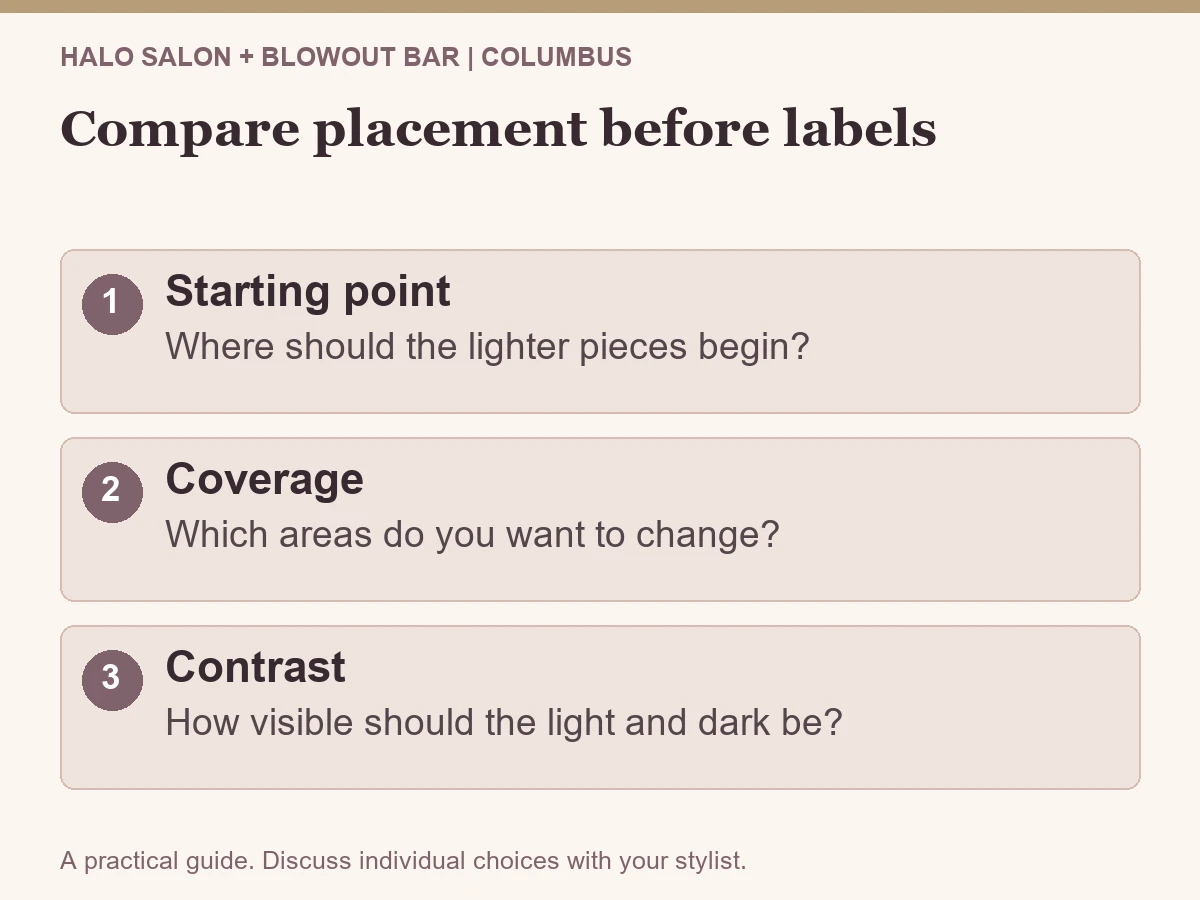
Look at the parting and the hair nearest the scalp in your reference image. Does the brightness appear close to the root, begin farther down, or vary from one area to another? That observation is often more useful than whether the caption calls the look balayage.
Traditional highlights can be placed with a relatively regular pattern near the root. A painted approach may create a more varied starting point through the lengths. These are common directions, not rigid rules. A colorist can adjust the placement, and a blended root area may involve additional work beyond the original lightening technique.
Tell your stylist what you want to see when you wear your normal part. Also discuss the hairline if you often tie your hair back. A result that looks balanced with the hair down may read differently in a ponytail, bun, or tucked style.
Useful consultation wording is: “I like how softly the lighter pieces begin here, but I want to understand what my own regrowth would look like.” That keeps the conversation focused on a visible feature and its upkeep.
2. How brightness is distributed
A few brighter pieces around the face can create a different impression from brightness throughout the head, even when the shade is similar. Consider which areas you want to change: the front, the ends, the upper layers, the underside, or the overall appearance.
A partial service and a full service do not always mean the same thing at every salon. Ask which areas are included in the proposal and whether your reference requires more coverage than the appointment you selected. Do not assume a shorter service can deliver an image that involves work throughout the hair.
For a more useful Balayage vs Highlights discussion, compare views from the front, side, and back. Ask how placement will appear when your hair is straight, naturally textured, and styled. A curled photograph can separate pieces visually in a way that changes how much contrast you notice.
Decide whether you want a small visual update or a broader change. This gives the colorist a clearer brief and helps you understand why one approach, or a combination, may be suggested.
3. The contrast between light and dark
Brightness and contrast are related, but they are not the same decision. You may like lighter hair overall, or you may prefer a smaller number of brighter pieces against a deeper background. Explain which effect draws you to a reference image.
Ask whether the picture shows fine, closely spaced pieces, broader ribbons, or a mix. Describe whether you want the result to be obvious from across a room or softer at a glance. These are preference questions, so there is no universal correct answer.
Hair.com’s guide to balayage and highlights, produced by L’Oréal’s professional products division, offers another explanation of the terminology. A brand guide can help you recognize placement differences, but it cannot determine the right technique for your particular hair.
Bring the conversation back to your starting point. Your existing light and dark areas may affect how a new pattern can be built. If you have bands of previous color, describe them honestly instead of assuming that a technique name will conceal every difference in one appointment.
4. What grow-out could look like
People often associate balayage with softer grow-out. That can be part of the intended design, but it does not make every painted result maintenance-free. Tonal changes, the amount of brightness, the root design, and your own preferences all affect when you may want another conversation.
Likewise, highlights do not automatically mean a sharp, uniform line. Fine placement, blending choices, and the broader color plan can change the appearance of regrowth. Ask the colorist to explain the likely maintenance of the actual proposal rather than a generic version of the technique.
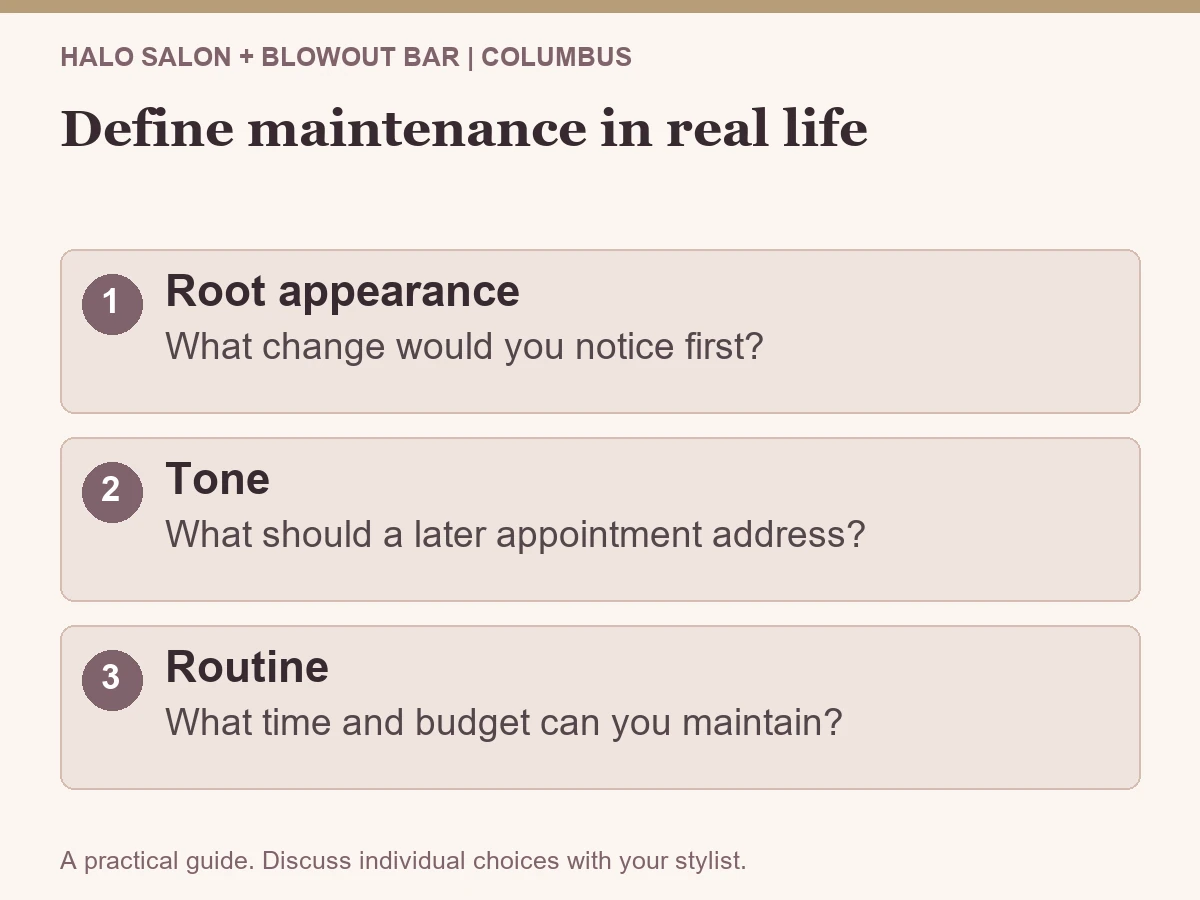
Think about which change would bother you first. You may notice a stronger root contrast, fading tone, a shift in warmth, or the difference between a polished salon finish and your daily styling. Naming that concern helps define what “low maintenance” means for you.
Do not use another person’s appointment interval as a promise. Instead, ask what signs would indicate that your color needs attention and whether future visits would address lightening, tone, root blending, or another part of the plan.
5. The role of your starting color and history
Your current hair is the starting material for the appointment. Previous permanent color, lightening, home products, and other chemical services can affect the discussion. A recently applied product and an older treatment still present through the lengths can both be relevant.
Write a short timeline before the visit. Include anything you cannot identify with certainty and bring packaging photographs if available. A colorist can use that history to ask better questions; an incomplete account makes the conversation less reliable.
The Balayage vs Highlights choice may be secondary to understanding what your hair can reasonably support. A stylist may suggest assessment, testing, a different tone direction, or a staged plan before deciding on placement. That is a reason to clarify the proposal, not a reason to force a specific technique.
Tell the salon about previous reactions to hair-color products. The FDA’s hair-dye safety information explains the importance of product warnings and patch testing. Follow the instructions for the products involved rather than inventing a universal preparation rule.
6. The scope of the appointment and budget
The price of a color appointment depends on the work included, not simply which of two labels appears in a caption. Ask whether the proposal includes tonal refinement, root work, finishing, or other steps, and what could change if the assessment reveals additional needs.
Make sure the booking description matches the desired result. A limited placement appointment may serve a focused goal, but it should not be assumed to include a complete transformation. A more involved service may also need more time than a photograph suggests.
Explain both your immediate budget and the maintenance budget you want to continue. Those are useful design constraints. You may prefer a smaller change that fits your routine over a larger change that requires attention more often than you would like.
Ask for an explanation before agreeing to add-ons or a revised plan. You should understand what each step contributes. This is more useful than deciding that balayage must always cost more, or that highlights must always be quicker, without comparing the actual service scope.
7. How the result works with your haircut and styling
Color placement and haircut shape are seen together. Front pieces, layers, perimeter length, and the way you part your hair can change which lighter sections become visible. If a haircut is also being considered, discuss the combined goal before treating each decision separately.
Bring a photograph of your hair in its ordinary state if you normally arrive with it heavily styled. Explain whether you prefer to air-dry, use a smooth finish, or add waves. This helps you compare the reference with the version you are likely to wear most often.
A dramatic wave pattern can make ribbons of color look more separated in a picture. Ask what the proposed placement would look like without that exact finish. You are choosing hair for everyday use, not only for one salon photograph.
Before deciding between Balayage vs Highlights, ask which part of the look comes from placement and which comes from styling. That distinction can prevent you from requesting more color when the feature you actually want is movement, volume, or a different finish.
A practical comparison to take into your consultation
Use this table as a discussion tool rather than a rulebook. The finished effect can overlap, and a colorist may recommend a blended approach. Write down your preferences in the right-hand column on a copy of the guide.
| Decision | What to compare | Your useful question |
|---|---|---|
| Starting point | Brightness near the root or farther through the lengths | Where will the lighter pieces begin on my normal part? |
| Coverage | Selected areas or a broader distribution | Which areas does this appointment include? |
| Contrast | Subtle dimension or more visible ribbons | How strong will the difference look without waves? |
| Upkeep | Root appearance, tonal changes, and personal tolerance | What would a future maintenance visit address? |
| Budget | The complete service and later routine | What is included in the proposed plan? |
For example, imagine a guest who likes the brightness in one photograph but the softer root in another. She also wants to keep a familiar parting and avoid frequent major changes. Rather than combining two service names herself, she can explain those visible goals and ask the colorist to recommend a coherent approach. This is a planning example, not a documented client result.
After the consultation, summarize the agreed direction in one sentence. If your sentence still contains several conflicting goals, ask which one takes priority. A clear plan is easier to understand than a long list of techniques without a defined result.
What to bring to your Columbus color conversation
Prepare a short color history, a few annotated references, your normal styling routine, and a realistic maintenance budget. Include a picture that shows your starting point in ordinary lighting. Avoid applying a filter that changes the shade you are trying to discuss.
Learn about Halo Salon + Blowout Bar Columbus, then use the contact page to ask which appointment fits your questions. The salon is at 6501 Whitesville Rd, Suite 100, Columbus, GA 31904. Confirm current service availability and preparation instructions directly.
At the end of the conversation, make sure you know the proposed direction, the work included, the expected appointment scope, and the next decision you need to make. You do not need to master color terminology to ask for that clarity.
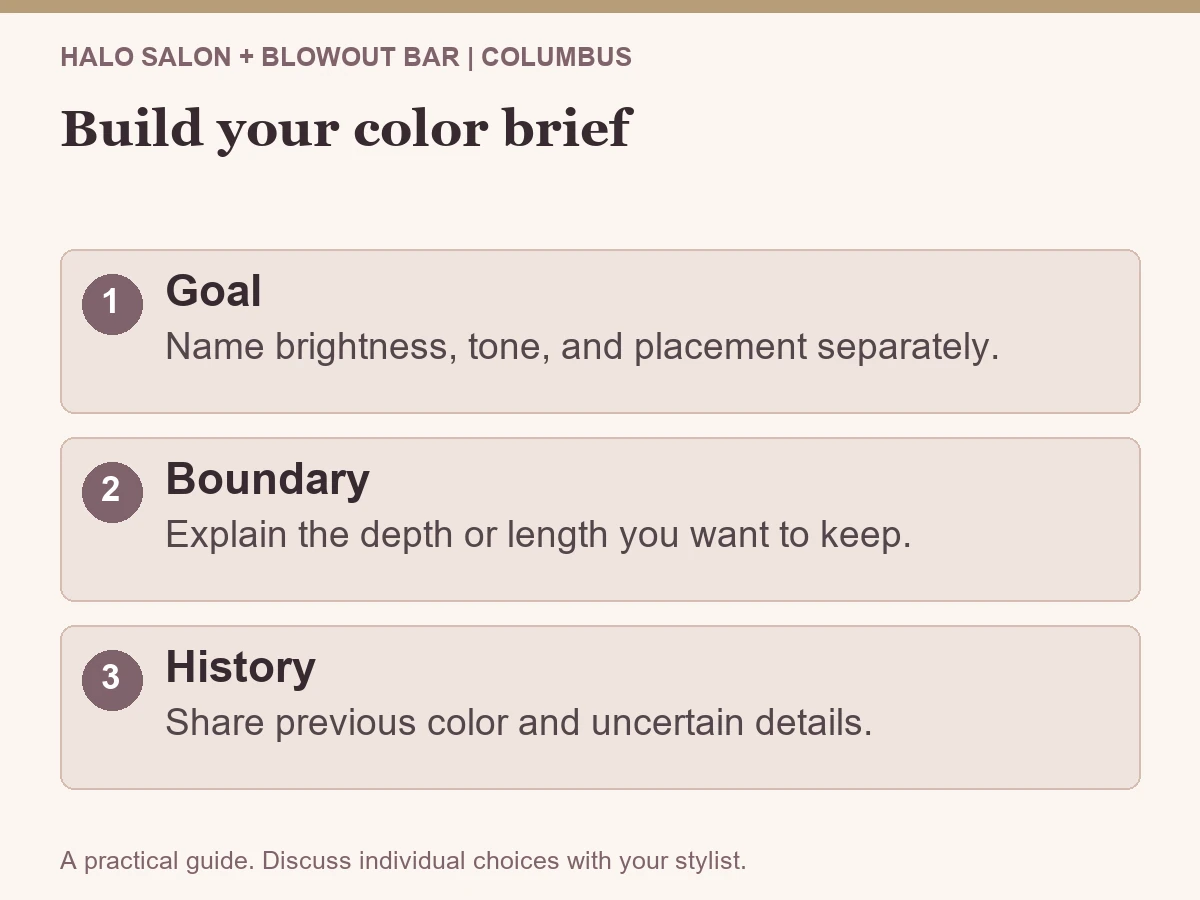
Three ways to turn a color reference into a useful brief
The following examples are hypothetical planning exercises. They do not predict a result or describe Halo clients. Their purpose is to show how a question about Balayage vs Highlights can become a clearer discussion of preferences.
Brief A: brightness near the face
You like the front of a photograph but do not want the same change throughout the head. Start by identifying the front detail and the amount of depth you want to keep elsewhere. Ask which areas a proposed appointment includes and how the result would appear with your normal parting.
The important question is not whether a caption calls the effect balayage. It is what placement would address your goal and how that placement connects with the rest of your existing color. Ask what would remain unchanged so the scope is explicit.
Brief B: softer-looking grow-out
You are comfortable with your current brightness but prefer a different appearance near the root as the hair grows. Bring a photograph of the stage you find difficult to manage. Explain whether you are concerned about a visible contrast, a tonal change, or the way the color looks with your usual styling.
Ask the colorist to separate those issues. A change in placement and a change in tone are different decisions. Understanding which one is being proposed makes the maintenance conversation easier to follow.
Brief C: a larger change with clear limits
You want a more noticeable overall difference, but you have a fixed maintenance budget and a history of previous color. Record those facts before discussing a technique. Ask what the professional can assess at the consultation and what may need a staged plan.
Be clear about which limit matters most. You may prefer to protect a certain length, avoid a particular contrast, or spread a larger change across separate decisions. A useful recommendation should explain those tradeoffs rather than treat the reference as an automatic promise.
After the consultation, compare the plan with the brief
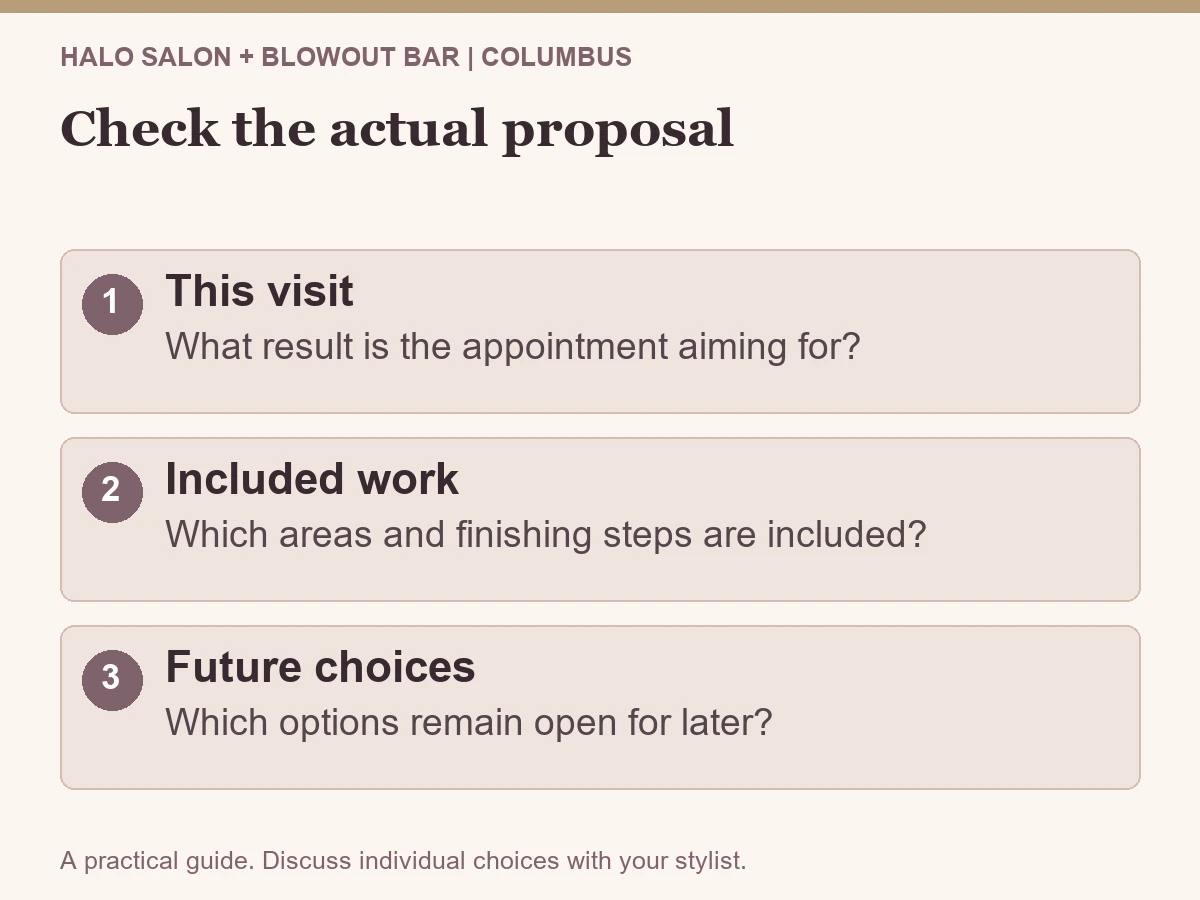
Write down the intended appearance for this visit, the main areas being addressed, the appointment scope, and the suggested maintenance. If one of those does not match your original priority, ask what changed and why.
This review does not require technical expertise. It requires understanding the goal in ordinary language. You should be able to explain whether the plan aims for focused brightness, a different root appearance, or a broader change.
Save the summary with your references. At a later visit, it can help you describe what you would keep, what you would adjust, and which part of your original goal has changed. That creates a more useful conversation than starting again with a new label every time.
Balayage vs Highlights FAQs
Is balayage always more natural-looking?
No technique guarantees one visual effect. Starting color, contrast, placement, tonal choices, and styling all contribute. Explain what “natural-looking” means to you and identify the feature you like in a photograph.
Are highlights only for blonde hair?
Highlights describe lighter pieces relative to a base, not a requirement to become blonde. Ask about the degree of brightness and tone you want instead of treating one shade family as the definition of the service.
Can a stylist combine approaches?
Colorists may combine placement methods within a plan. Ask what the suggested combination is intended to achieve and how it affects the appointment scope. The choice should follow an assessment rather than an assumption from a photo caption.
Which option costs less to maintain?
There is no universal answer. Compare the actual work, expected tonal upkeep, root design, and your preferences. Ask for current Columbus pricing and a practical explanation of maintenance before deciding.
Can I choose based on a photograph alone?
A photograph is a useful conversation starter, but it does not reveal all the services or styling behind the result. Your history, starting point, and routine still need to be part of the consultation.
Choose a goal you can describe clearly
The best Balayage vs Highlights decision starts with the result you want to wear. Identify placement, brightness, contrast, and maintenance priorities, then let an informed consultation connect those preferences with a practical plan. Contact Halo Columbus at (706) 221-6100 to ask about current color appointments and the appropriate next step.
About this guide: Prepared for Halo Salon + Blowout Bar Columbus to support informed salon conversations. Individual services, product directions, and professional recommendations should be confirmed for your circumstances.